Skip to content

Free Poker Card Box Template for Any Deck

PackDesignAI is a free poker card box template maker: tap poker, bridge or tarot, or type your deck size in mm or inches, and get a playing card box template with tucks, a thumb notch and fold allowances for your board. Download vector PDF, SVG, DXF or a 300 dpi PNG. Free to design without an account, no watermark.

Dieline generator

Reverse tuck endECMA A20.20.03.01 style

Inside dimensions

mm

Front, left to right

mm

Side, front to back

mm

Bottom to top

Measure your product, then add 1 to 3 mm (about 1/16 in) on each side so it slides in.

Common sizes

Fills length, width and height.

CutCreaseBleed
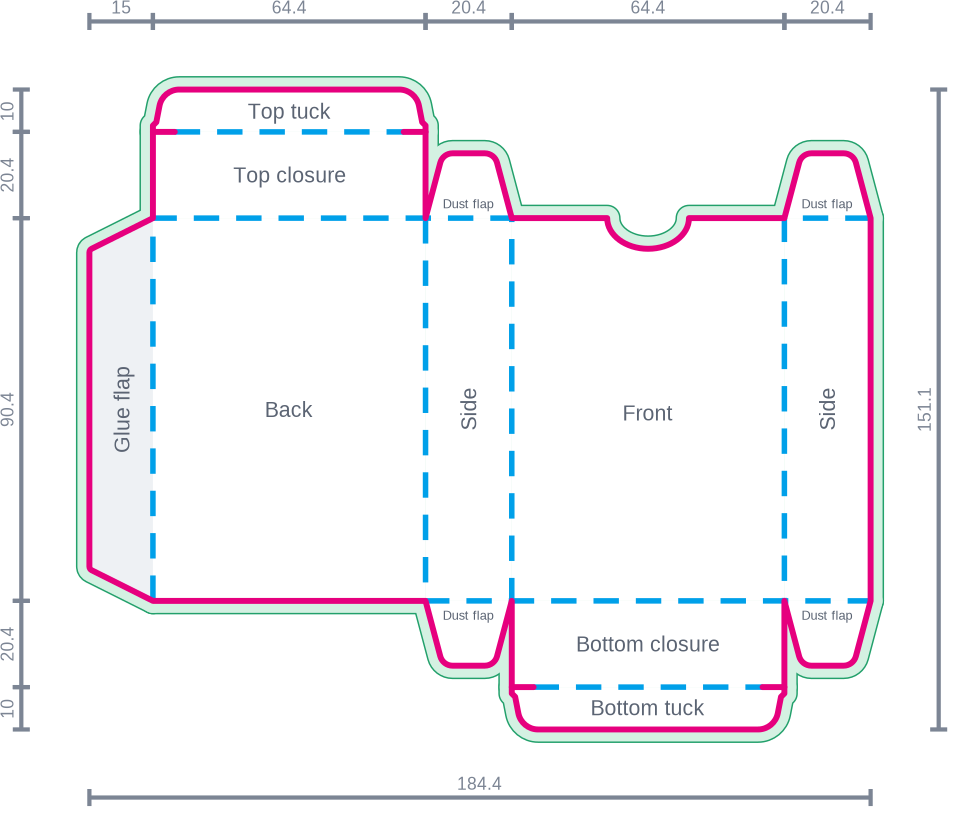
Flat dieline previewFrontSideSideBackGlue flapTop closureTop tuckBottom closureBottom tuck1564.420.464.420.4184.41020.490.420.410151.1

Flat size 184.4 x 151.1 mm · 14pt SBS · Caliper 0.36 mm

Vector PDF at 1:1, page 229.2 x 195.9 mm. Cut and crease are spot colors (CutContour, Crease) on their own layers.

Design this box with AISaved in this browser
  • First download free
  • Runs in your browser
  • Nothing uploaded
  • No watermark

Print and fold a sample before production. Board, printing and folding all vary.

  • First download free
  • Poker, bridge and tarot sizes
  • PDF, SVG, DXF and PNG
  • Nothing uploaded

Playing Card Box Templates for Three Decks

Each card box below was drawn by the tool on 14 pt board: cut lines solid, crease lines dashed, the thumb notch on the front.

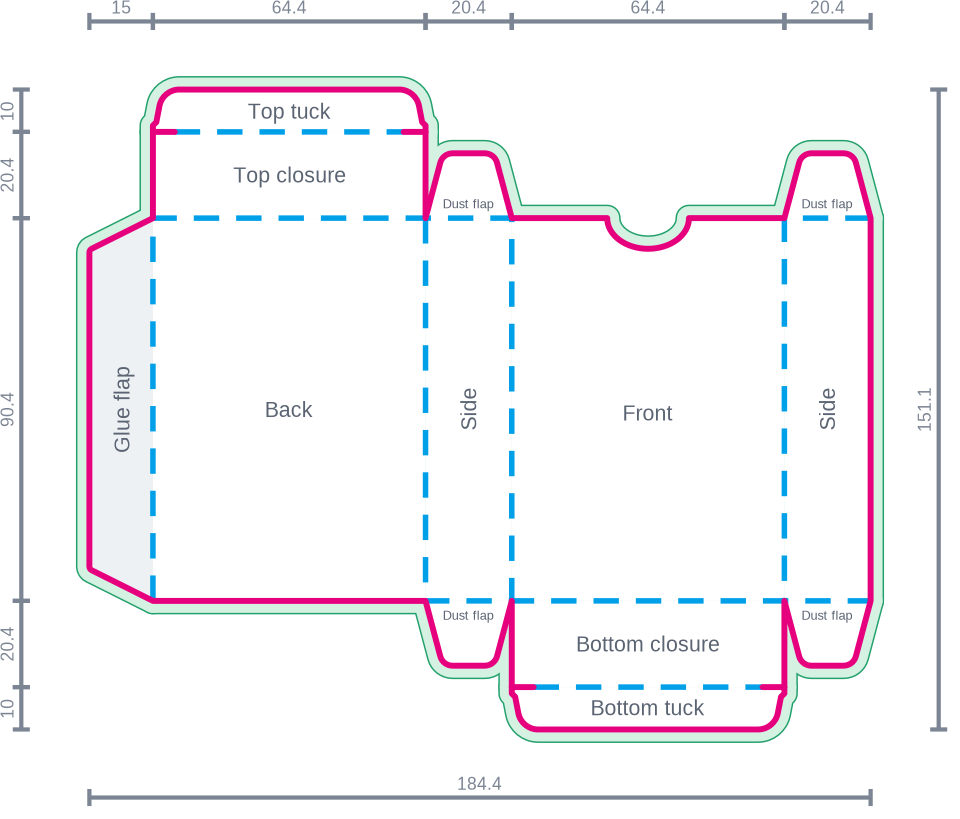
Flat dieline of a poker card tuck box with dimensions in millimeters
Poker deck64 × 20 × 90 mm, fits Letter and A4
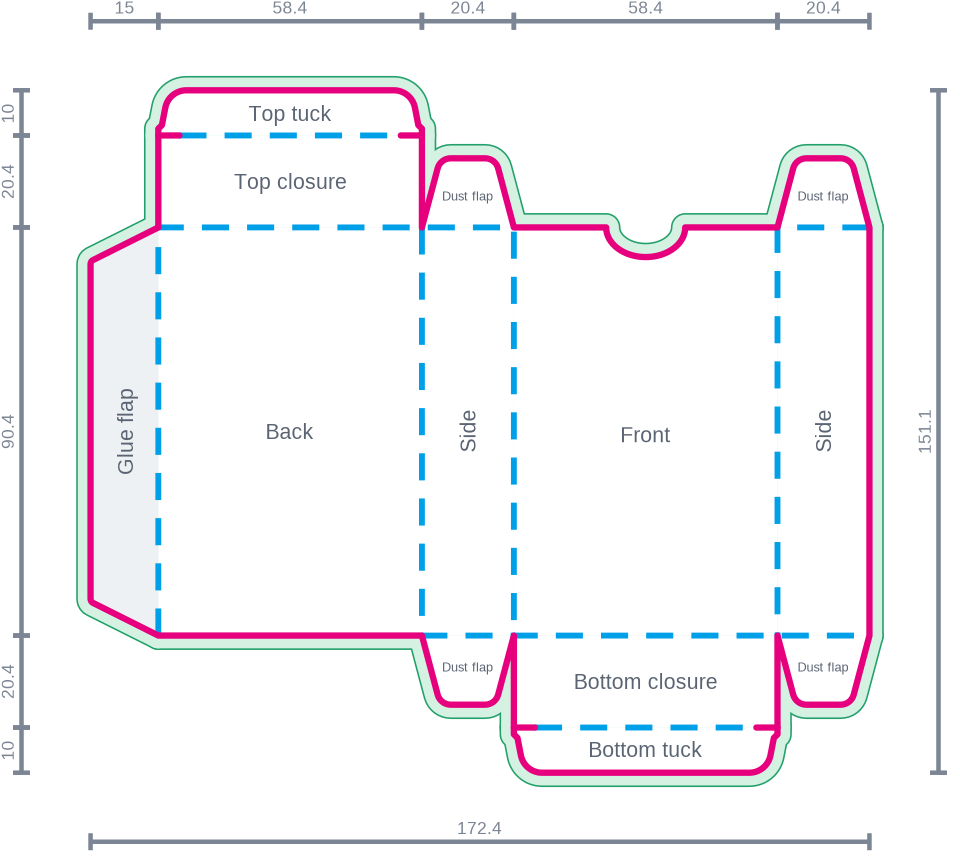
Flat dieline of a bridge card tuck box
Bridge deck58 × 20 × 90 mm for narrower cards
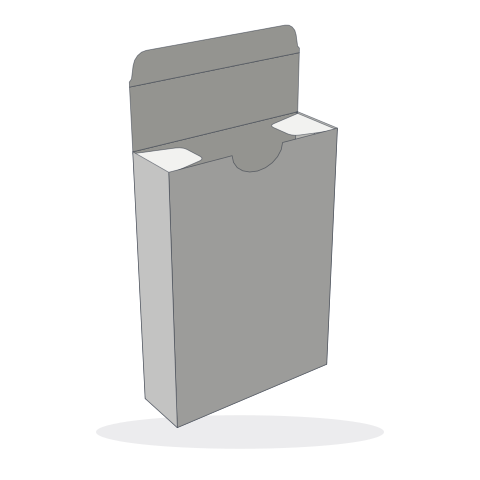
3D preview of a playing card box folding from its dieline
3D viewThe card box folding shut
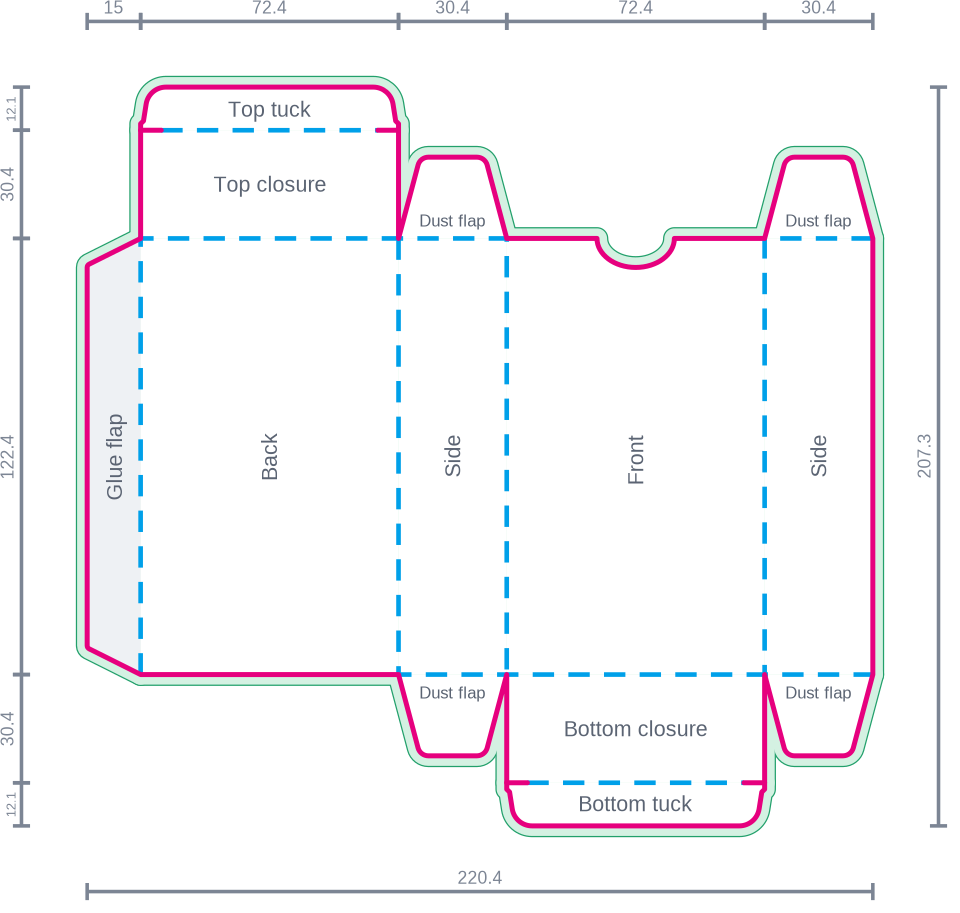
Flat dieline of a tarot card tuck box
Tarot deck72 × 30 × 122 mm, prints on Tabloid or A3

Real output of the tool. Use this example opens that size in the generator above.

How to Make a Poker Card Box Template

Measure the deck, set the board, download. Three steps.

  1. Tap Poker, Bridge or Tarot, or type the inside size: length across the card face, width for the deck thickness, height along the long side. Millimeters or inches both work.

  2. Start from 14 pt SBS or pick another board. Keep the thumb notch so a finger can reach the tuck, keep the slit lock so the lid stays shut, and set bleed to 3 mm, 1/8 in or none.

  3. Fold it in 3D, read the Checks tab, then download vector PDF, SVG, DXF or PNG. Print at 100%, cut, score the dashed lines and glue the side flap.

Poker deck box dieline at its flat size

A Card Tuck Box Template Measured in Millimeters

Made for real decks: exact inside sizes, a notch for your thumb and a lid that stays closed.

  1. Bridge deck box dieline with panel dimensions

    Deck sizes

    Poker, bridge and tarot in one tap

    The chips fill common deck sizes, not standards. Card stock, card count and sleeves all change the thickness, so measure your own deck and type it in. The drawing adds the board caliper at every fold.

  2. Card tuck box closing in 3D with its thumb notch

    Notch and lock

    Easy to open, hard to spill

    A half moon thumb notch on the front lets a finger reach the tuck. Two short cuts at the tuck crease, the slit lock, catch the dust flaps so the lid stays shut. Both can be switched off in Details.

  3. Tarot deck box dieline checked for size

    Checks

    Warnings for thin boxes

    A deck box is only about 20 mm deep, so board matters. The Checks tab warns when the caliper is thick for the smallest panel, when a tuck is too short or too long, and when the drawing will not fit Letter or A4.

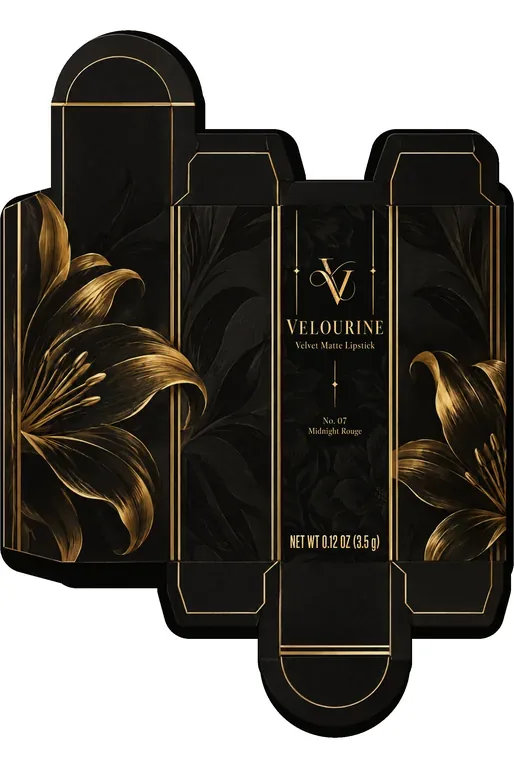
  4. Partner demo: slim black and gold carton artwork on a flat dieline

    Artwork

    Design the box, keep the lines

    The tuck box template is lines only. Lay your card back design over it in your own program, or open the box designer to design it with AI (AI designs use credits). Pictured: a partner demo made with AI.

Sizing a Playing Card Box Template

Deck sizes, sleeves, board and printing in four short notes.

Common card sizes

Poker cards are commonly 2.5 × 3.5 in, bridge cards 2.25 × 3.5 in, and tarot cards often about 70 × 120 mm, though every maker differs. The chips add a little room around the cards: 64 × 90 mm for poker, 58 × 90 mm for bridge, 72 × 122 mm for tarot.

Thickness and sleeves

Stack the deck, press it lightly and measure the thickness, then add 1 to 2 mm. Two decks? Double it.

Sleeved game cards need a deck box template sized to the sleeve, not the card: measure one sleeved card and the stack.

Board and closure

Thin SBS paperboard is the usual board for a card box, and this playing card box dieline starts at 14 pt. Thicker board rounds the folds on a box this small, and the Checks tab says when.

This tuck box template closes the top toward the back and the bottom toward the front, a reverse tuck like most retail card boxes.

Printing and folding

Poker and bridge boxes fit US Letter and A4; a tarot box needs Tabloid or A3.

  1. 1Print at 100% with fit to page turned off.
  2. 2Cut the solid lines, including the thumb notch and slits.
  3. 3Score the dashed lines, fold, and glue the side flap.

Print one box on plain paper first and slide the deck in. Adjust the size before you print on card.

Who Uses a Playing Card Box Template

Anyone with a deck that needs a home.

  • Game designers

    Prototype boxes for card games and playtest decks, resized in seconds when the card count changes.

  • Tarot and oracle creators

    A tarot card box template for your own deck, sized to the cards you printed.

  • Magicians and collectors

    Custom boxes for gaff decks, limited runs and cards that lost their original case.

  • Teachers and families

    Boxes for flash cards, quiz cards and homemade games that otherwise end up in a rubber band.

Poker Card Box Template FAQ

Short answers about decks, sizes and files.

Get Your Free Poker Card Box Template

Tap a deck, check the size and download a poker card box template as PDF, SVG, DXF or PNG. First download free, nothing uploaded.